

Home Furniture for Property Developers: Commercial Sourcing Guide 2026
Inconsistent material quality and missed installation milestones frequently derail large-scale fit-outs, turning high-value projects into logistical liabilities. Property developers often struggle to balance aesthetic vision with the rigorous durability required for long-term commercial performance and unit turnover. By partnering with a dedicated manufacturing specialist like Furniture Wholesale, developers can align engineering precision with project timelines. This guide outlines the essential procurement framework for sourcing reliable home furniture for property developers, focusing on material science, OEM sample gates, and rigorous quality control protocols for 2026.

Published by: Furniture Wholesale Technical Research & Sourcing Team

Key Takeaways
Commercial-grade upholstery should exceed 30,000 Martindale rubs to ensure fabric longevity in high-traffic residential or hospitality settings.
Pre-production samples typically require 10–18 days to finalize, whereas bulk production cycles generally span 25–40 days following sign-off.

Structural integrity for metal frames in commercial furniture should utilize 1.5–2.0 mm wall thickness to pass static load and fatigue testing.
Optimal KD flat-pack configurations for 40HQ containers target a load density of 65–70 CBM to minimize unit shipping costs per piece.
Overcoming Quality Discrepancies in Commercial Furniture Projects
Quality discrepancies in large-scale furniture procurement often stem from a lack of documented material standards and inconsistent raw material selection at the factory level. When sourcing home furniture for property developers, the primary risk involves the substitution of lower-grade composite boards or thinner-walled metal tubing that fails under commercial load. Establishing a robust technical file that specifies exact material grades, hardware specifications, and finish codes is the first line of defense against batch-to-batch variation that can compromise the integrity of an entire project.
Engineering standards must dictate the physical performance of every component, including moisture content in wood (8–12% for temperate climates) and chemical resistance of HPL surfaces. Failure modes such as joint separation, veneer delamination, or premature foam collapse are frequently linked to poor production oversight during the glue-curing or frame-welding stages. Implementing an AQL 2.5/4.0 inspection gate ensures that the finished product meets the structural demands of daily use, preventing costly warranty claims after the units have been handed over to end-users.
Factory mitigation requires direct oversight of the production line rather than relying on final-stage visual inspection alone. Procurement teams should mandate in-line QC reports that verify frame dimensions, weld penetration, and upholstery tension before the assembly process reaches the packing stage. By centralizing the bill of materials and requiring verified lab results for key components like foam density and fire retardancy, developers can ensure that the final delivery matches the approved golden sample exactly, maintaining consistent quality across multiple phases.
Field note: Ensure wood moisture content is verified by kiln-dry certification.
Common mistake: Skipping in-line inspections in favor of end-of-line checking.
Risk alert: Surface delamination often occurs when glue cure times are ignored.
Comparing Factory-Direct OEM vs. Furniture Trading Intermediaries
Choosing between a direct OEM manufacturer and a trading intermediary fundamentally changes the transparency and cost structure of your furniture supply chain. Direct factories offer granular control over tooling and customization, allowing developers to modify dimensions or integrate specific finish requirements that standard catalog items lack. Conversely, trading companies may provide a broader range of styles but often mask the true cost of production, introducing layers of margin that can erode the budget for large-scale developments where every unit cost matters.
The primary risk with intermediaries is the ‘paraphrased’ specification, where technical requirements are lost or altered during communication between the buyer and the actual workshop. Direct OEM partners provide direct access to engineering teams, ensuring that the structural design of furniture for property developers is optimized for both durability and cost-efficiency. This alignment allows for faster iteration cycles during the sampling stage, as the feedback loop between the designer and the engineer is not obstructed by multiple layers of administrative relay.
Procurement strategy should prioritize factory-direct relationships when volume thresholds are met, as this secures the intellectual property of the design and ensures consistent material procurement. Traders are most useful for highly fragmented orders that require consolidation across disparate product categories that a single factory cannot support. Ultimately, the decision hinges on whether the project requires standardized, off-the-shelf items or custom-engineered solutions that need to be held to rigorous, repeat-order quality standards over several years.
| Factor | OEM Factory | Trading Intermediary | Buyer Risk |
|---|---|---|---|
| Tooling ownership | In-house | Outsourced | MOQ reset |
| Sample cycle | 10–18 days | Add broker lag | Schedule slip |
| QC access | Line audit | Blind ship | Defect rate |
| Spec lock | Engineering sign-off | Trader paraphrase | ΔE drift |
Field note: Request factory business licenses to verify manufacturing capability.
Common mistake: Assuming all trading companies have in-house quality control labs.
Risk alert: Hidden sub-contracting can lead to unverified material usage.
International Commercial Furniture Compliance and Safety Standards
Navigating the landscape of international safety standards is critical when sourcing furniture for multi-unit property developments, as non-compliance can lead to failed safety inspections and legal liability. Key benchmarks such as the ANSI/BIFMA X5.1 standard for office and lounge seating provide the necessary framework for testing stability, weight capacity, and fatigue resistance over extended periods. Property developers must ensure that their procurement partners can provide valid, third-party laboratory test reports that verify compliance with these internationally recognized durability standards.
Fire safety is another non-negotiable aspect of commercial furniture procurement, particularly for upholstery and foam components used in high-density residential or common areas. Standards such as CAL 117-2013 or the more stringent BS 5852 are essential for ensuring that materials do not propagate fire in the event of an ignition source. Additionally, formaldehyde emission levels in composite woods must meet EPA TSCA Title VI or equivalent CARB standards to ensure that indoor air quality remains within safe, healthy limits for the occupants of the completed properties.
Procurement teams should build these compliance requirements into the initial RFP documentation to ensure that only qualified factories are considered for the contract. Asking for a ‘compliance pack’ that includes current certifications for all critical materials—fabrics, foams, and wood composites—should be a standard gate before any bulk production begins. By proactively validating these safety marks, developers protect the project from the risk of forced replacements or regulatory non-compliance during the final commissioning of the project site.
Field note: Always check certificate expiry dates on lab report documentation.
Common mistake: Relying on old test reports that do not match the current material batch.
Risk alert: Non-compliant foam is the most common cause of fire safety failure.
Mitigating Transit Defect Rates Through Packaging Engineering
High-volume rollouts for property developments often suffer from transit-related damage when packaging design is treated as an afterthought rather than a core engineering task. A recent project involving 500 modular lounge sets revealed that inadequate corner protection and excessive movement within the carton led to a 12% defect rate upon arrival. The root cause was identified as a lack of compression testing in the packaging design phase, which failed to account for the weight of the furniture when stacked in standard export containers.
To mitigate this, our engineering team implemented a re-design of the KD carton structure, utilizing 5-ply corrugated cardboard with specific EPS reinforcement at high-stress points. We also introduced a drop-test protocol that simulated the rigors of mechanical handling to ensure that the internal bracing could withstand the vertical forces of a full container load. This engineering pivot reduced the arrival defect rate from 12% to less than 1.5%, demonstrating the critical importance of packaging integrity in protecting the project’s bottom line.
The project takeaway is clear: packaging is not merely a logistics concern; it is a vital part of the product engineering lifecycle. Developers must require their suppliers to provide a carton load plan and a drop-test report for every major SKU before shipping begins. By treating the packaging as a protective shell that must meet specific G-force resistance standards, developers can significantly reduce the risk of structural damage and ensure that the installation schedule remains on track.
Field note: Request a 3-point drop test report for all custom furniture designs.
Common mistake: Using single-wall cartons for heavy or bulky commercial furniture.
Risk alert: Stacking weight in containers often exceeds the carton’s burst strength.
Structural Engineering and Flat-Pack KD Optimization for Volume Sourcing
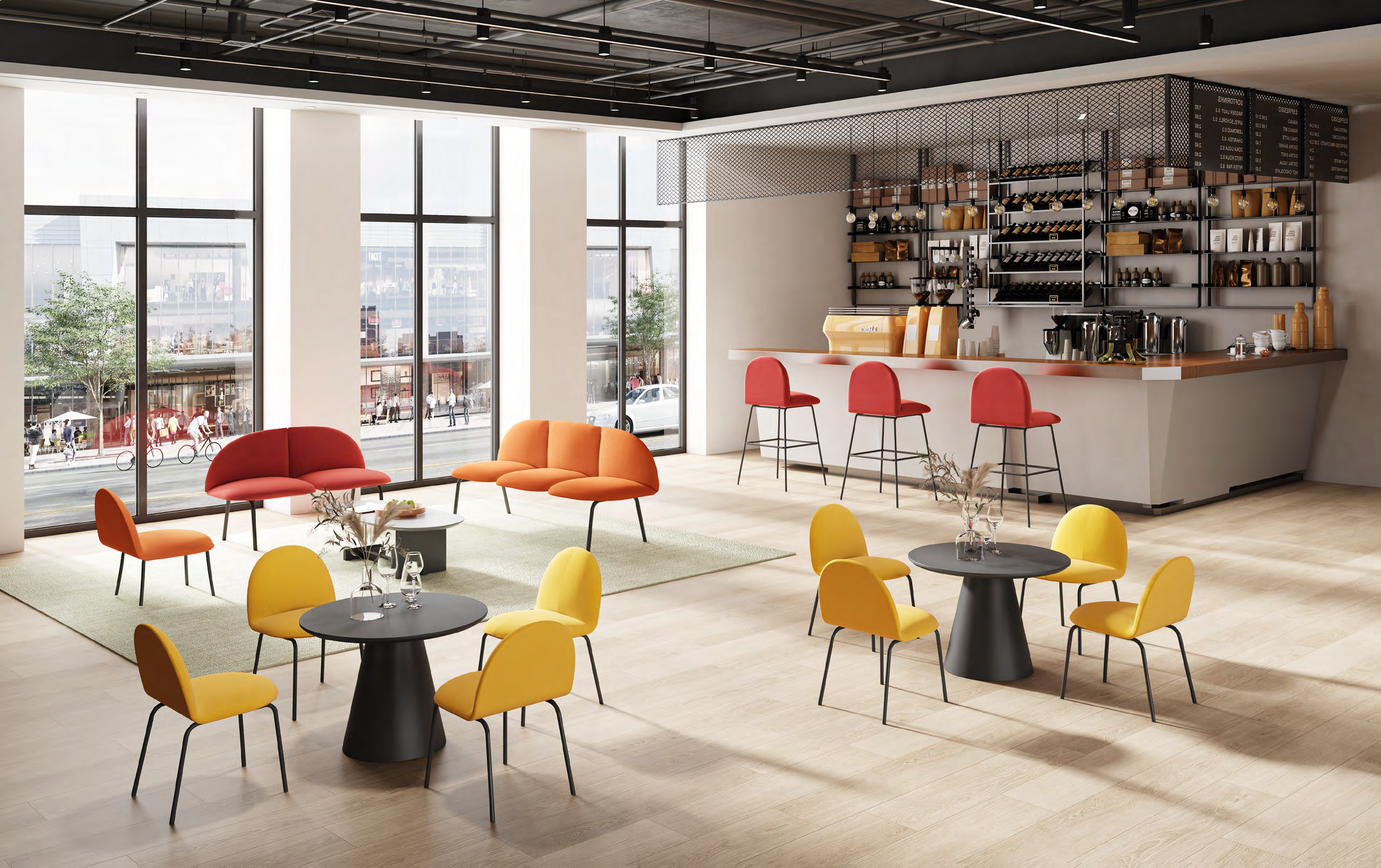
Flat-pack or Knock-Down (KD) engineering is the most effective way to optimize the logistics of furnishing large-scale developments, provided the connection systems are designed for long-term rigidity. Precision cam-lock joinery and threaded steel inserts allow for repetitive assembly and disassembly without compromising the structural integrity of the frame. When designing home furniture for property developers, the focus must be on creating sub-assemblies that are intuitive to assemble while maintaining the strength of a fully factory-built unit.
To achieve maximum container utilization, each KD carton must be engineered to nest efficiently, aiming for a net volume that fills at least 65 to 70 CBM in a standard 40HQ container. This requires a modular approach to design where components are sized to fit within standardized carton dimensions, reducing the volume of empty space within the box. If the KD design is not optimized during the prototyping phase, the resulting shipping inefficiencies will directly increase the per-unit cost, potentially rendering the project budget unsustainable.
The procurement process should involve a ‘cube audit’ where the supplier submits a detailed packing list and carton dimensions for each SKU early in the design phase. This allows the logistics and engineering teams to coordinate on the most efficient loading patterns, ensuring that heavy items are placed at the base and fragile components are adequately isolated. By standardizing the KD approach across the furniture range, developers can simplify the site-installation process and reduce the time required for assembly teams to complete the project.
| SKU Type | CBM per Unit | Stacking Limit | Risk Mitigation |
|---|---|---|---|
| Lounge Sofa | 0.85 | 3 high | Reinforced corner caps |
| Dining Table | 0.22 | 6 high | Edge-to-edge padding |
| Side Chair | 0.15 | 10 high | Plastic film wrap |
| Storage Unit | 0.45 | 4 high | Internal bracing |
Field note: Always dry-fit the assembly process with a prototype before mass production.
Common mistake: Overlooking the need for specialized tools in the assembly kit.
Risk alert: Loose fasteners are the primary failure point in KD furniture.
The Step-by-Step International Furniture Procurement Workflow
A structured procurement workflow is essential to ensure that the design-to-delivery cycle remains predictable and transparent. The process begins with the finalization of CAD drawings and finish specifications, which must be signed off by both the design team and the manufacturer to prevent errors. Once the documentation is locked, the factory produces a ‘Golden Sample’ that serves as the benchmark for all subsequent bulk production, ensuring that every detail is captured before the factory begins the tooling and material procurement phases.
In-line quality control is the next critical phase, where inspectors visit the production floor to check the consistency of materials and the quality of craftsmanship. This is followed by a pre-shipment audit, which involves a random sampling of the finished goods to verify that they meet the agreed-upon criteria for aesthetics, function, and packaging. This stage is designed to catch any systemic issues before the products are loaded into containers, providing a final opportunity for rework or adjustment without the cost of a return shipment.
The final steps in the workflow involve verifying the integrity of the KD packaging and overseeing the container stuffing process to ensure that the cargo is secured properly. Once the container is sealed, the documentation—including the commercial invoice, packing list, and compliance certifications—is finalized for the destination customs process. Following this six-step workflow allows property developers to maintain a clear line of sight into their supply chain, reducing the risk of surprises and ensuring that the installation schedule stays intact.
Field note: Use a digital project management tool to track sign-offs at each step.
Common mistake: Changing finish codes after the sample sign-off stage.
Risk alert: Delayed documentation filings often cause destination clearance issues.
Project Case Study: Rapid Custom Commercial Project Rollout and Lead-Time Control
A recent commercial project required a rapid 45-day turnaround for a custom-finish lounge furniture rollout, presenting a significant bottleneck in the project timeline. The challenge was to source a specific, high-durability fabric that met local fire codes while maintaining the strict aesthetic requirements of the interior design team. By leveraging our established supply chain and existing finish-code documentation, we were able to fast-track the procurement of the raw materials and prioritize the production of the critical-path items.
Our engineering team coordinated directly with the factory to run a simultaneous production of the metal frames and the upholstery components, effectively collapsing the typical 60-day lead time into the required 45-day window. We implemented a daily status reporting system that kept the developer informed of every milestone, from the arrival of the raw fabric to the completion of the powder-coating process. This transparency allowed the developer to manage the site-installation team with confidence, knowing the exact arrival date of the furniture.
The project was successfully completed on time, with all units meeting the rigorous durability standards required for the high-traffic commercial space. The outcome highlights the value of having a dedicated manufacturing partner who can navigate complex custom requirements under tight deadlines. By maintaining a library of pre-approved material specs and having clear lines of communication with the factory floor, we can accelerate the production cycle without sacrificing the quality that property developers demand.
Field note: Always maintain a buffer of 10% for critical-path items in rush projects.
Common mistake: Overestimating the speed of custom material sourcing.
Risk alert: Rush production often leads to skipped QC steps if not audited.
Managing Minimum Order Quantities (MOQs) and Tiered Wholesale Pricing
Managing MOQs and tiered pricing is a strategic exercise in balancing project scope with manufacturing efficiency. For developers, the goal is to consolidate orders across multiple units or project phases to reach the volume thresholds that offer the best price breaks. This often involves standardizing finishes and materials across the entire furniture suite, which not only improves the unit price but also simplifies the inventory management and maintenance requirements for the completed property.
Tiered wholesale pricing models are designed to reward volume, but they also require a clear understanding of the ‘tooling amortization’ costs for any custom-designed pieces. When a project requires a unique design, the initial MOQ will likely be higher to cover the costs of creating custom molds or jigs. Once these costs are amortized over the total project volume, the unit price decreases significantly, providing a strong incentive to plan for the entire project lifecycle rather than sourcing in piecemeal orders.
Effective procurement strategy involves negotiating long-term agreements that lock in pricing for the duration of the project, protecting the developer from raw material cost fluctuations. By providing a clear forecast of the order volume, developers can incentivize suppliers to hold stock of critical materials, further reducing lead times and improving the overall stability of the supply chain. Ultimately, the most successful developers are those who treat their furniture supplier as a strategic partner, working together to optimize both the cost and the quality of every piece.
| Tier | Volume (Units) | Lead Time | Price Impact |
|---|---|---|---|
| Pilot | 50–100 | 45 days | Baseline |
| Standard | 101–500 | 35 days | -5% |
| Bulk | 501-1000 | 30 days | -12% |
| Strategic | 1000+ | 25 days | -20% |
Field note: Ask for a tiered pricing sheet that clearly outlines the break points.
Common mistake: Ignoring the cost of tooling amortization in the unit price.
Risk alert: Unforecasted volume spikes often lead to production delays.
Decision Framework
By volume: Map MOQ tiers and SKU mix before award—mixed lounge and seating orders need aligned finish families and KD carton plans for Home Furniture for Property Developers.
By speed: Prototype approval (10–18 days) gates bulk production; rush awards without signed samples reset tooling and MOQ economics on Home Furniture for Property Developers.
By cargo profile: Flag fire/safety marks (EN 16139, EN 16139, and market-relevant fire/composite-wood evidence) before production—not after export packing.
Real-World Corridor Case Studies
A luxury apartment complex required a 400-unit seating rollout with custom fire-rated upholstery. We managed the raw material sourcing and factory-direct QC to ensure the units met CAL 117 standards, solving a critical material lead-time bottleneck.
A multi-site coworking operator required a standardized modular set for uniform installation across three cities. We established a 2-year pricing agreement and standardized the KD packing to ensure easy assembly at each site.
Execution Checklist for Home Furniture for Property Developers
Securing the right home furniture for property developers is a multi-layered process that requires technical rigor, clear manufacturing partnerships, and a commitment to quality from the earliest design stages. By locking in commercial-grade durability specs, conducting thorough sample reviews, and ensuring full compliance with fire and safety standards, developers can protect their margins and deliver lasting value to their end-users.
The success of any large-scale fit-out rests on the ability to anticipate and mitigate risks before they manifest on the installation site. By following the procurement framework outlined in this guide and leveraging the expertise of a dedicated OEM partner, developers can ensure that every unit, from the lobby to the residential suite, meets the highest standards of performance and design, keeping the project on schedule and within budget.
Process and Checkpoints
Project Scope & Finish Lock
Confirm floor plans, seating counts, fabric/color codes, and logo placement before sampling Home Furniture for Property Developers.
Commercial Spec & Sample Gate
Approve PP samples for frame wall thickness, foam density, Martindale counts, and hardware grades tied to Home Furniture for Property Developers.
OEM/MOQ & Pricing Confirmation
Lock MOQ tiers, tooling amortization, and volume pricing in the project award sheet for Home Furniture for Property Developers.
Bulk Production QC
Run weld, powder-coat, cushion, and carton QC against the signed commercial BOM before export packing.
KD Export Packing
Validate carton dims, ISPM-15 wood evidence, and 40HQ cube targets for Home Furniture for Property Developers KD flat-pack loads.
Destination Delivery & Install
Coordinate biosecurity filings, lift limits, and inside-delivery windows so site install dates stay intact.
Confirm the right route for your shipment
Ready for a scoped proposal on your next project? Share your floor-plan constraints, finish codes, and target install dates with our team for a tailored OEM solution.
Request a route reviewFrequently Asked Questions
What Martindale rub count should buyers specify for high-traffic upholstery?
For high-traffic commercial environments, we recommend a Martindale rub count of at least 30,000 to ensure the fabric maintains its integrity and appearance under daily use.
How long does a typical PP sample cycle take after finish lock?
A typical pre-production (PP) sample cycle takes 10–18 days to complete, allowing for material sourcing, prototype assembly, and final quality review before bulk production.
Which factory audit gates should run before first bulk PO release?
Before releasing a bulk PO, you should audit the factory’s structural testing lab, their incoming material inspection process, and their in-line quality control documentation systems.
What MOQ tiers apply when mixing lounge and seating SKUs?
MOQ tiers are generally calculated based on the total container volume or the individual SKU threshold, depending on the complexity of the materials and custom tooling required.
Which compliance marks are mandatory for commercial furniture in the target market?
Mandatory marks typically include fire safety certifications like CAL 117 or BS 5852, and durability benchmarks such as ANSI/BIFMA X5.1 for structural performance.
How should KD flat-pack cartons be engineered to protect corners in ocean transit?
KD cartons should incorporate 5-ply corrugated cardboard with reinforced EPS corner caps and internal bracing to distribute weight and absorb impact during mechanical handling.
MOQ and lead times vary by factory load; confirm written quotes.
Informational only; not binding legal or compliance advice.
Benchmarks reflect standard 2026 OEM practice for this category.